Italy measures the vanSection 1
Italy decides where you sleep by measuring the van
Before you choose a route, Italy has already consulted the tape measure.
The numbers that run the show
A campervanned tour of Italy is, in the first instance, a geometry problem. Length, height and gross vehicle weight (the maximum permitted total mass of the vehicle fully loaded, usually abbreviated GVW) settle which sostas accept you, which passes you can physically navigate, and which ferry crossings are open to your booking class. The question of where you would like to sleep is entirely secondary to where the measurements permit you to sleep.
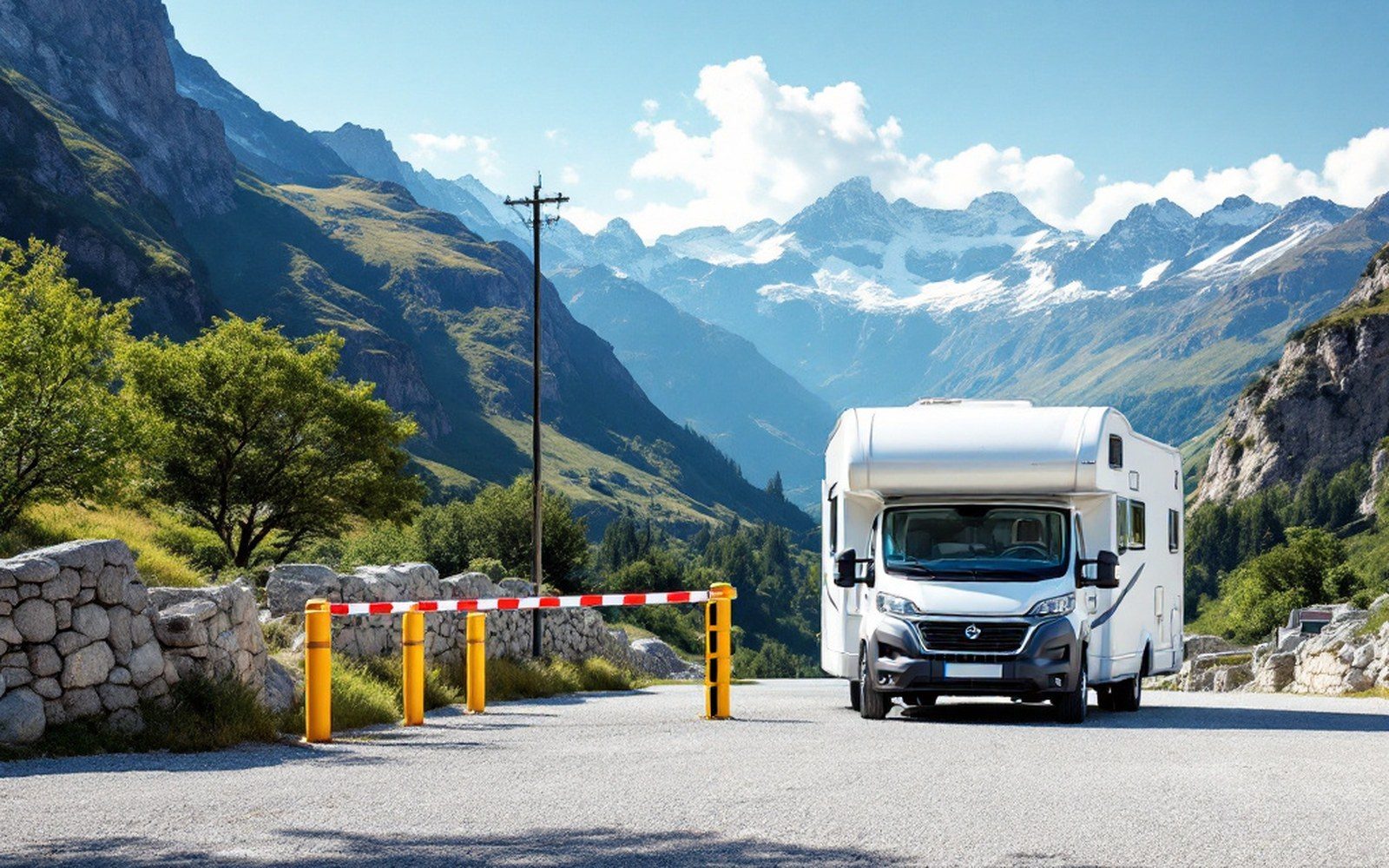
The most immediately practical limit is length. Italian aree di sosta — the hardstanding service points that form the spine of van travel here — are designed around a standard bay, and that standard is most commonly seven metres. An eight-metre vehicle will overhang or block a neighbouring bay; a vehicle beyond nine metres may not fit at all, and the entrance barrier or the kerb geometry will tell you so before you have even cut the engine. Some sostas publish their maximum length on the sign at the varco (the entry point, usually a camera post or a height bar); many do not, and the only data you have in advance is from other travellers or from a verified database entry. When a sosta works, it works because the van fits and the service column is reachable; when it doesn't, you are reversing out onto a public road.
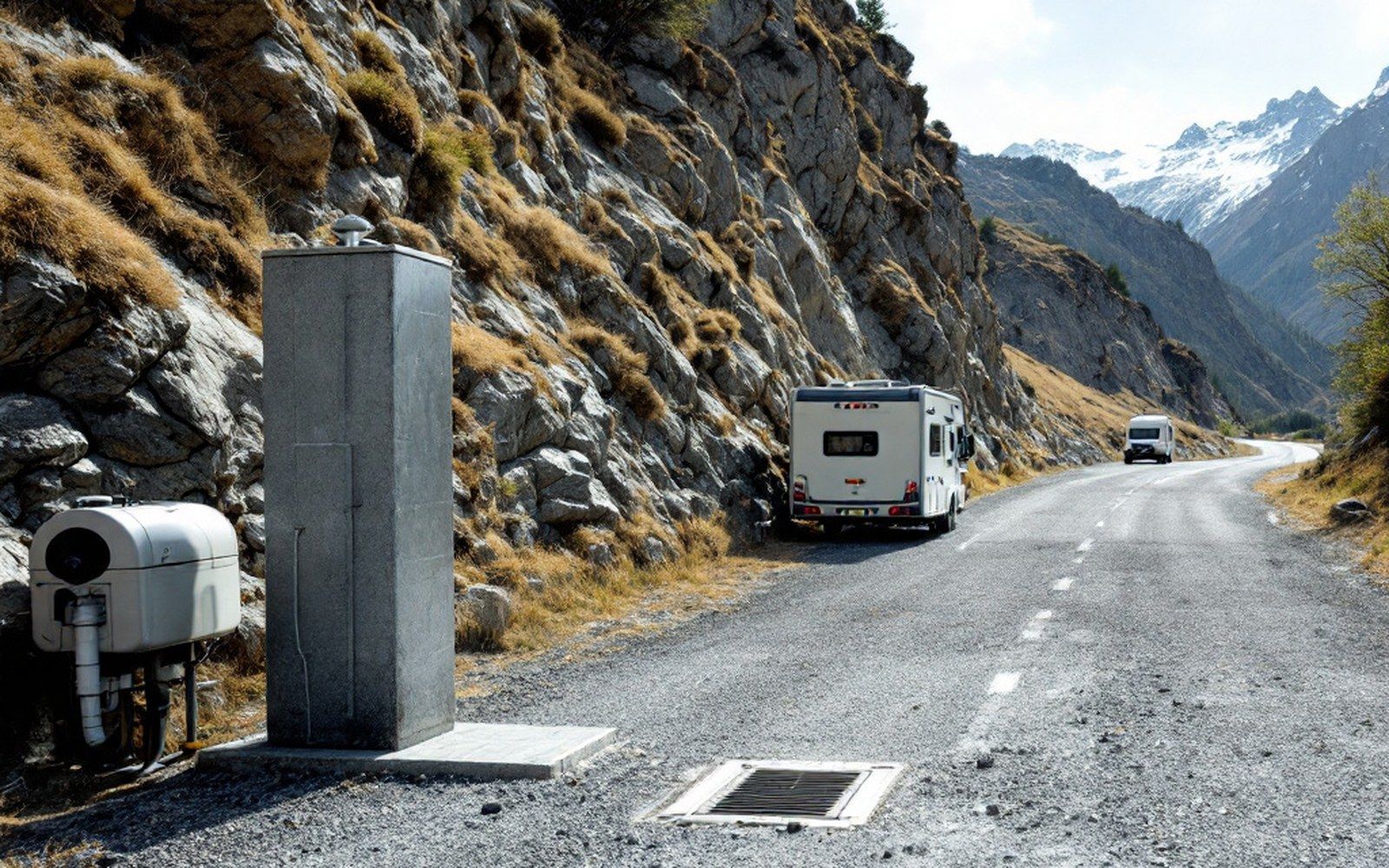
Height is the second filter and, for tall roof conversions and motorhomes with roof boxes or satellite dishes, it bites in unexpected places. The posted height limit at a sosta entrance matters, but so does the height of the underpass on the approach road, the low branch of the cedar in the car park, and — more consequentially — the height restrictions enforced at tunnel mouths on mountain routes. The standard Italian road sign for height, a circle with a red border and a number in metres, is authoritative but assumes a vehicle manufacturer's specification. A professional conversion or an aftermarket roof raise may not match the original registration documents, and that discrepancy is the driver's problem, not the sign's.
Weight sits behind both, quieter but with larger consequences when violated. Bridges on secondary roads — the category of road that connects the interesting places — carry posted axle limits and GVW limits that are enforceable by the road authority. A vehicle registered at 3,500 kg may appear just inside the common threshold for a weight-restricted bridge, but a vehicle loaded with water, gas, clothing, food and two people may well exceed that figure. The registration document states the limit; the actual load is the driver's calculation. Italian highway regulations on vehicle mass and dimensions set the framework, but local bridge orders can be more restrictive than the national code.
Passes, ferries and the van that is slightly too long
The Stelvio Pass is the case study everyone reaches for, and with reason. At 2,757 metres above sea level, it is the highest paved road in the Eastern Alps, and its northern ascent from Prato allo Stelvio is a sequence of tight switchbacks where the constraint is not gradient or horsepower but whether the vehicle's length and turning circle can complete the bend without stopping. The road authority has published a vehicle length limit — set by local traffic orders and liable to change — for through passage on the most technical section. A vehicle longer than that is not merely inadvisable; it is prohibited, and the prohibition is enforced seasonally by local traffic orders. Bormio, at the southern foot, is the point where longer vehicles typically end their ambition and begin a detour.
The Dolomites present a different geometry of the same problem. The passes connecting the valley systems — Pordoi, Sella, Gardena — are paved and maintained, but their approach roads narrow in places to a width that a wide-body motorhome fills almost completely. Width and turning-radius limits on Dolomite roads are logged in OpenStreetMap's restriction data, which records physical maxima collected from survey; those numbers tell you what the road can accommodate, not what the sign necessarily says. Where the road is wide enough for a van to proceed, the hairpin at the top may not be, and the only exit is the way you came in.
Ferries from the mainland to Sardinia, Sicily and the smaller islands classify vehicles by length and height, with different rates, different decks and sometimes different sailings for vehicles beyond specified thresholds — typically seven metres length and around two metres height. A vehicle that falls into a higher classification may find that the sailing it wanted is already sold out to smaller vehicles in the cheaper bracket, or that the deck allocated to larger vehicles on that route is open to the weather. The booking is made in a declared vehicle class, and the measurement is the driver's declaration; discrepancies discovered at the ramp can result in surcharges or, in full crossings, rescheduling.
Where the measurements compound
The difficulty with Italy is that the three dimensions interact. A vehicle with a GVW of 3,500 kg, a length of 7.2 metres and a height of 2.8 metres is not failing any single limit catastrophically, but it is at the boundary of each. It cannot enter the Stelvio's restricted section by length. It triggers the upper-height category on some ferry routes. It fills a standard sosta bay and may not fit the entrance bar of those with lower height restrictions. And it is carrying a mass that, once loaded, may push it toward the weight limits on older bridges on the strade provinciali (provincial roads) that connect the places the autostrada does not.
Lucca illustrates the urban dimension. Its ZTL — zona a traffico limitato, the limited-traffic zone enforced by camera at every varco in the historic walls — applies to all vehicles, but the streets inside the walls are additionally governed by their own width. Even with a permit, a full-width motorhome may find that the carriage of a Roman-period street does not accommodate its mirrors. The ZTL camera does not measure you; the stonework does.
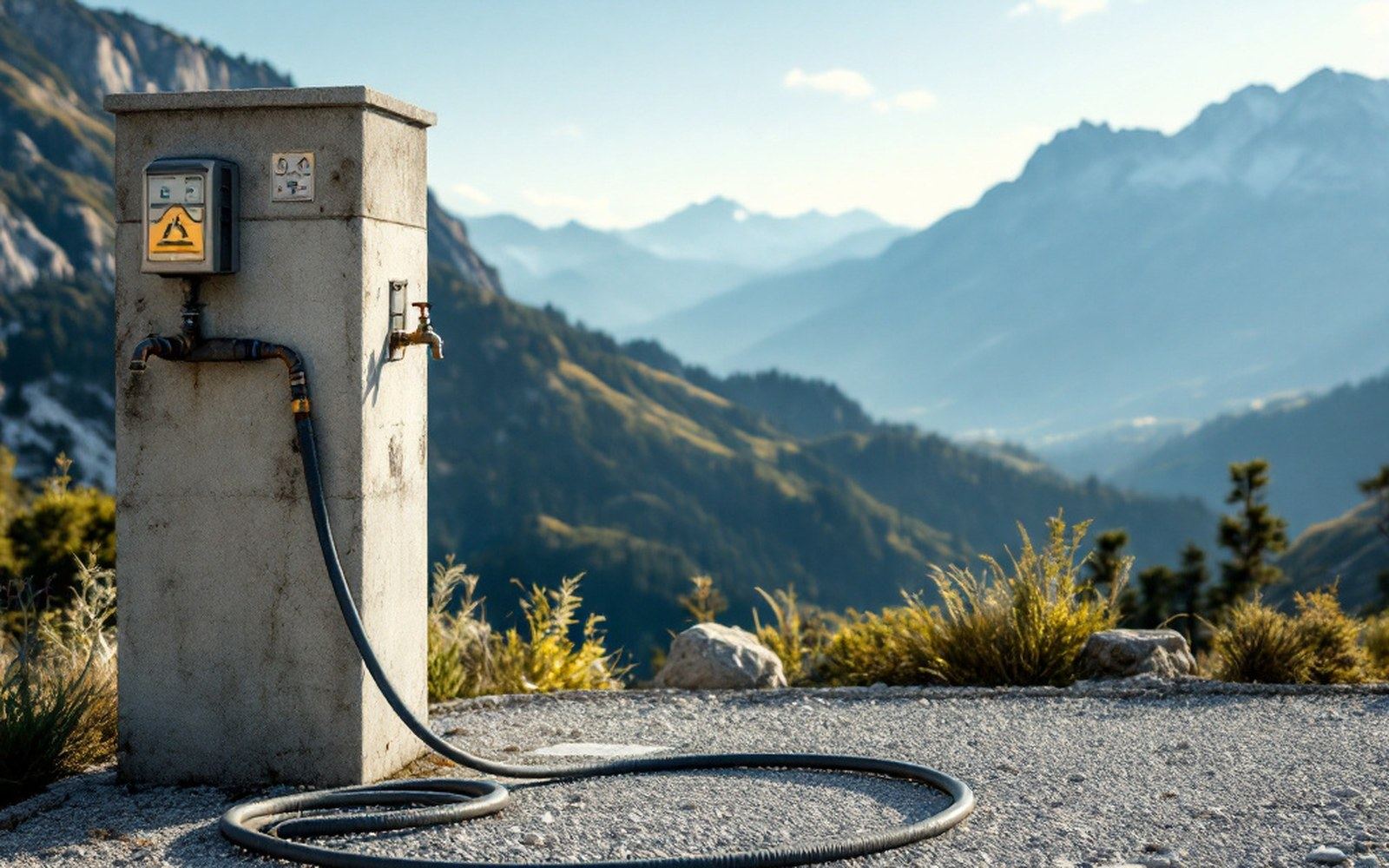
Tuscany compounds this further. The white gravel roads, or strade bianche, connecting agriturismi across the Crete Senesi and the Val d'Orcia are unclassified, unmapped for weight limits and sometimes single-track. A van that has come this far on a route chosen for its views meets its final test in a passing place it may not be able to use.
The discipline Italy asks of a van-traveller is specific: you fix the measurements before you fix the itinerary. Not the other way around. The sosta that appears on the planning map may not receive your length; the pass that looks navigable by gradient may prohibit your wheelbase; the road to the farmhouse stay may require a reversing manoeuvre your vehicle cannot complete. The tape measure precedes the route, and the route precedes the pleasure.