Italy measures the vanSection 1
Where the Vans End Up Instead
When sostas are full or shut, campervan drivers find themselves reading tarmac edges rather than guidebooks.
The Sosta Is Not Always Open
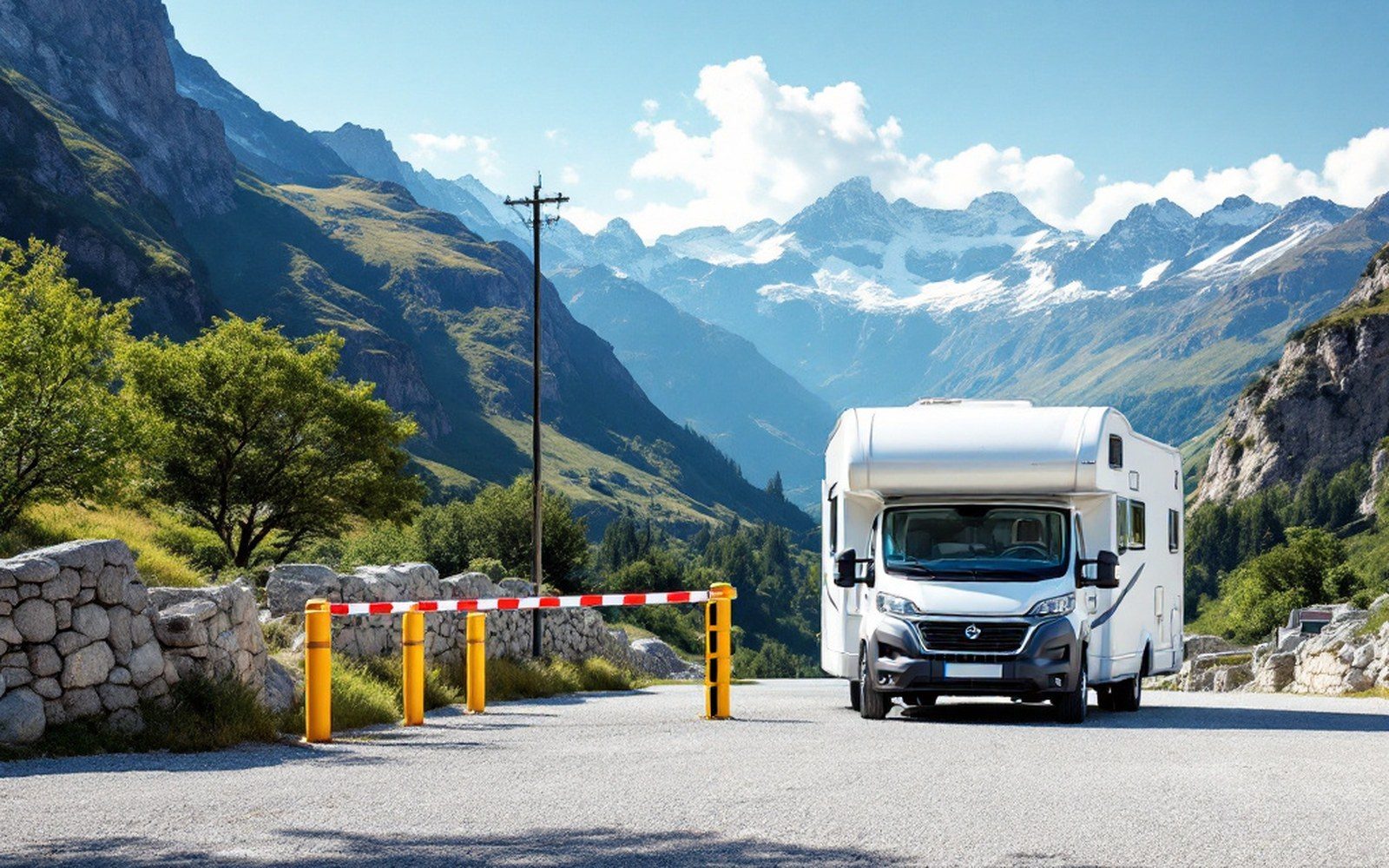
An area di sosta (a dedicated motorhome service and overnight point) has a capacity limit and a season. Outside peak months many close entirely; in August the ones that stay open fill before noon. The driver who arrives at a shut barrier or a full bay has no obvious next move built into the system, and the informal geography that fills the gap is worth understanding before you need it at dusk.
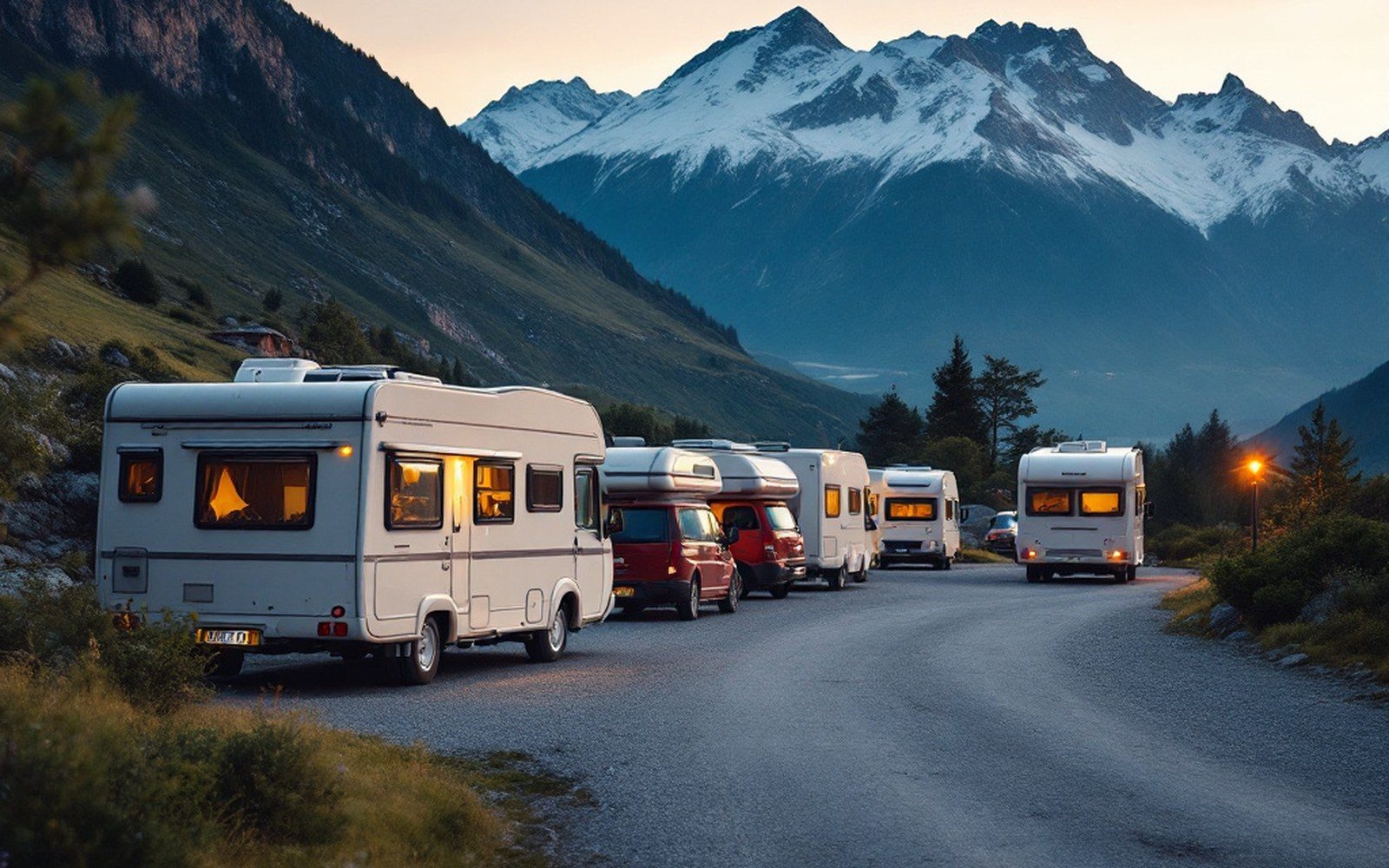
The most common overflow is the supermarket edge — specifically the far corner of a large-format retail car park where local traffic does not reach and where the tarmac is wide enough to accommodate a long vehicle without blocking access. Italian supermarket chains, following a pattern common to northern European retail across the continent, tend to anchor their large stores well outside the historic centre, which means they already sit beyond the ZTL perimeter that bars most campervans from the old town. The asphalt is maintained, there is typically a skip or bin point, and the ambient lighting makes the location feel less exposed than a roadside pull-off. None of this constitutes permission. It is simply a description of where the vans go.
Ferry Aprons and Seafront Margins
The second category is the ferry apron — the flat waiting area at the entrance to a ro-ro (roll-on/roll-off) terminal. Smaller ferry crossings, particularly on the Sicilian, Sardinian and Aeolian island services, have staging areas designed for vehicles with overnight waiting in mind, because the ferries run on timetables that do not align with working hours and drivers arrive ahead of time. The surface is usually reinforced, the turning radius is generous because articulated lorries use it, and there are often toilet facilities somewhere within the terminal boundary. Whether overnight waiting is tolerated or explicitly permitted varies by operator, port authority and season, and the position of the vans tells you more than any sign.

The third type is the seafront car park, specifically its landward end furthest from the beach access points. Italian comuni (municipalities) manage these spaces with seasonal rhythm: high season brings attendants and pay machines, low season brings neither. In autumn and winter the aprons outside resort towns are often deserted, the machines switched off, the lines faded. A long vehicle can sit without obstructing anything or anyone. The seafront near Naples, the Adriatic resort strips north of Bari, the Ionian coast of Calabria — these are not romantic locations, but they are flat, accessible and untroubled out of season, which is three things a tired driver values.
What These Places Share
All three alternatives share a structural quality: they were built for something else at a larger scale than ordinary car parking. The supermarket served articulated deliveries, the ferry apron served lorries and coaches, the seafront car park served peak summer tourism. That scale — the wide turning circle, the reinforced surface, the lack of low branches or tight corners — is what makes them usable for a long motorhome when the purpose-built sosta is unavailable.
They do not share water, a grey-drain point or a chemical cassette dump. That gap is real. Drivers working through an informal overflow stay must have enough fresh-water capacity and enough holding-tank space to bridge to the next genuine service point, and the service column at a proper sosta is what makes the rest of the route possible. The informal places are a bridge, not a base.
What they also share is variability. A supermarket edge that was untroubled in October may have a security guard and a height barrier by March. Ferry terminals across Italy are managed by individual port authorities under the Autorità di Sistema Portuale framework, and policy on overnight staging is set locally, not nationally. Seafront car parks are subject to ordinanze comunali — municipal orders — that can change between seasons without much public notice. The Italian Highway Code, the Codice della Strada, defines stopping and parking rules that apply regardless of what a van driver observes others doing. Reading the scene and reading it again the following morning are not the same thing.