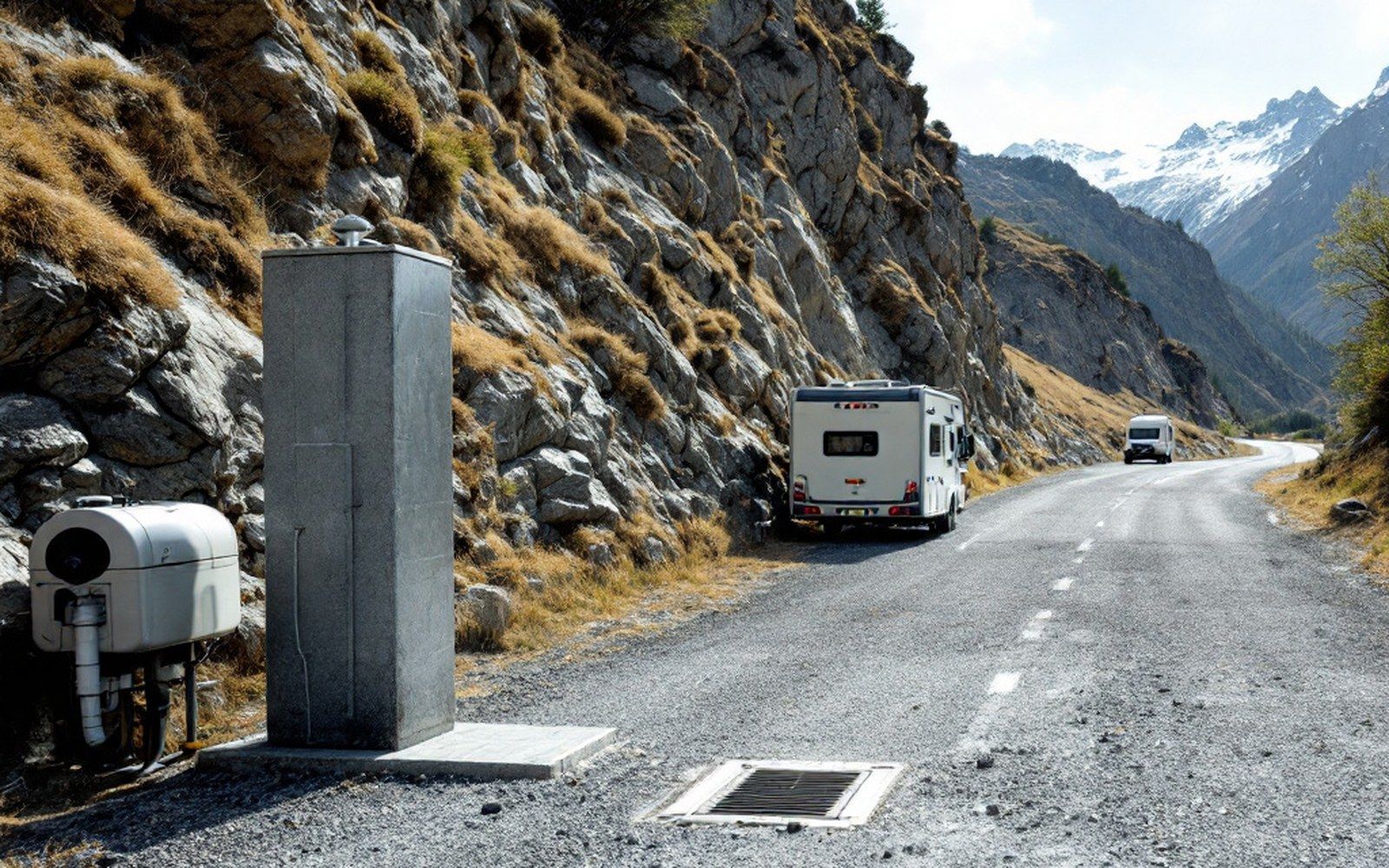
Italy measures the vanSection 1
The service column, and what it actually provides
Four connections run a stay — water in, water out, waste down, and sometimes power. The column is where a van becomes liveable again.
What the column gives you
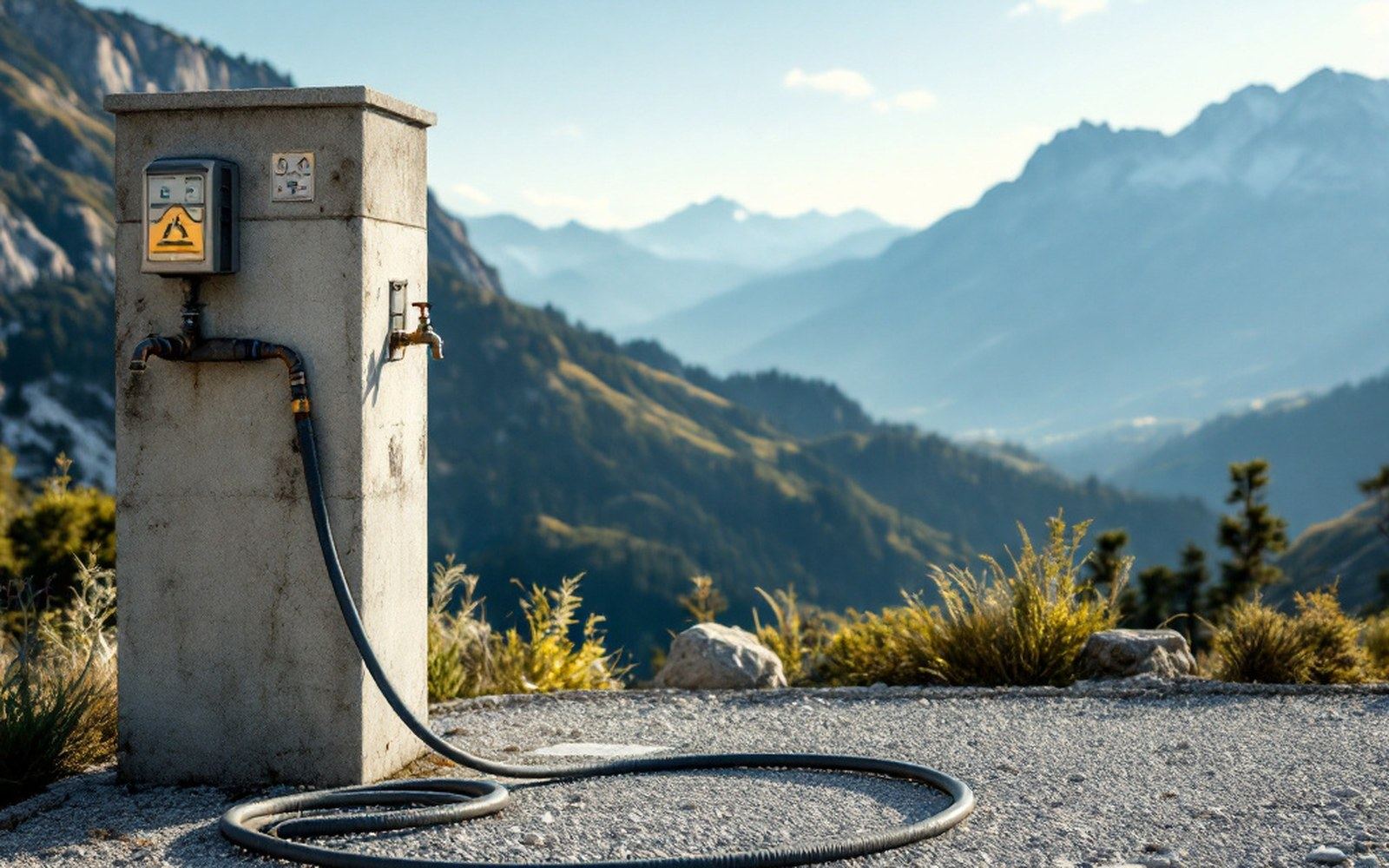
An area di sosta (a designated overnight service point for campervans, distinct from a campsite) is built around one piece of infrastructure: the service column. At its simplest this is a standpipe and a drain set into concrete. At its most complete it adds a chemical toilet dump point, a mains power socket and, occasionally, a rinse hose. The variation between those two states is wider than any guide can fully capture — but the components are consistent enough to describe.
Fresh water is almost always present. It comes from a timed or token-operated tap, sometimes metered by a paid chip or a coin, sometimes simply open. The flow rate matters as much as the presence: a low-pressure standpipe on a warm evening, shared between a dozen vans, will fill a tank slowly. Water quality follows municipal supply standards; Italian drinking water is governed by Legislative Decree 31/2001, which aligns with EU directive minimums, and sosta supply draws from the same mains.
At the worst sites it is absent, which sets a hard limit on how long any van with a toilet can stay.
Grey water — the drain from the sink and shower — goes into a recessed grate or a shallow channel beside the column. This is not always present at the most basic service points, and where it is absent the grey tank must hold until the van reaches somewhere that has one. The distinction between a sosta and a campeggio matters here: a full campsite will have individual pitch drainage; a sosta may share one central grey outlet between all users.
The chemical toilet dump point (the cassetta, the pull-out drawer from a porta-potti or built-in toilet) needs a rinse point with some pressure and a dedicated drain. Better-equipped sostas have a separate hopper for this; lower-grade ones direct everything into the same central grate. At the worst sites it is absent, which sets a hard limit on how long any van with a toilet can stay.
Mains power — typically a 3A or 6A CEE socket (the blue round-pin industrial connector) — is the element most frequently listed and most frequently broken or simply absent on arrival. Where it exists it extends a stay into colder weather and runs the refrigerator without draining the leisure battery. Where it does not, a solar panel or a generator is the only alternative, and generators are unwelcome at most sostas after quiet hours.
The column decides the rhythm of a trip just as the road decides the route.