The limit is the radiusSection 3
The limit is the radius
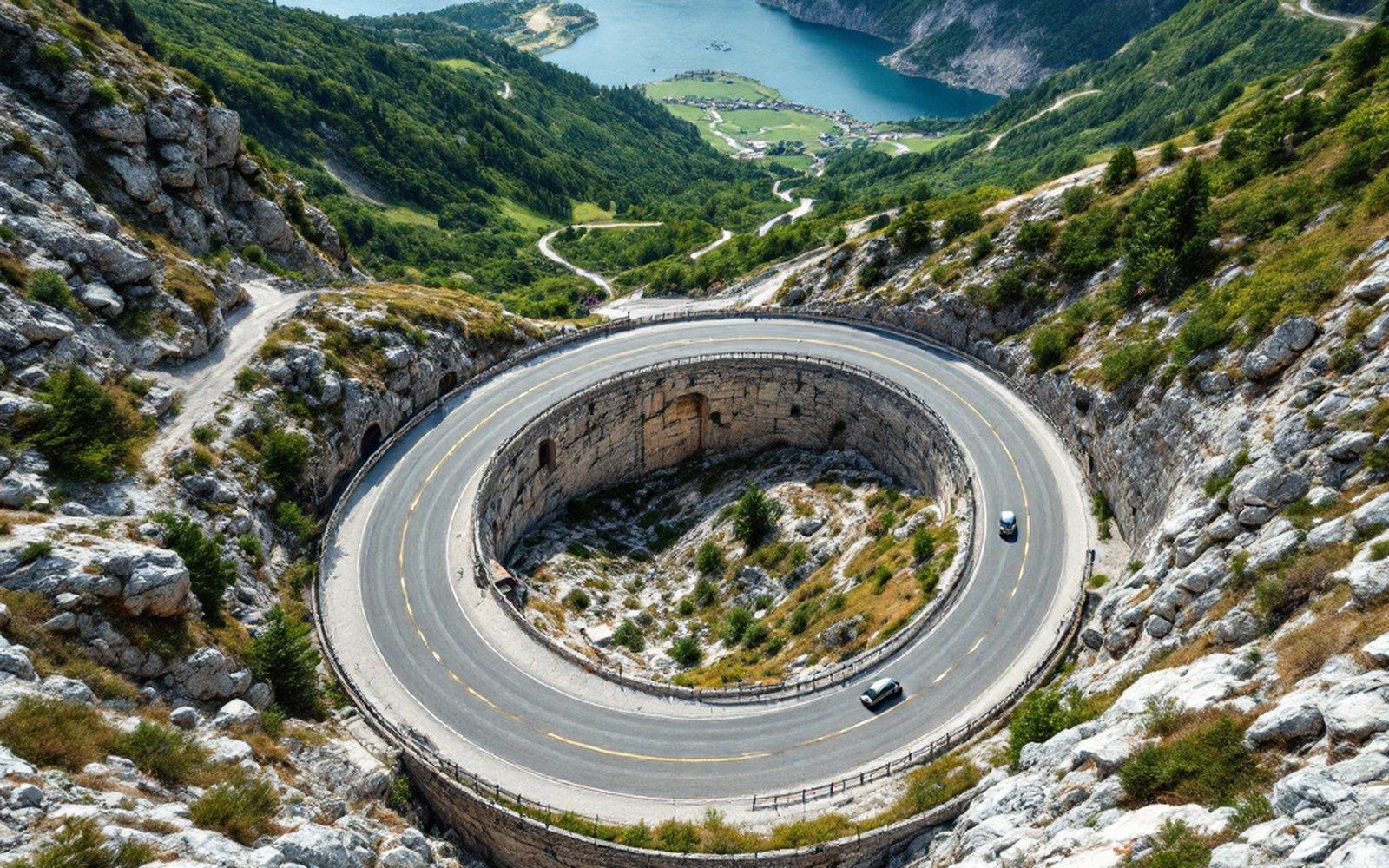
On the high passes, the constraint is not gradient or power but whether a long vehicle can complete a hairpin without a shunt.
Why gradient is the wrong worry
A modern motorhome with a turbodiesel engine climbs. That is a solved problem. Steep ramps exist, the engine handles them, and the brakes — properly used in engine braking mode on the descent — handle the downhill. Drivers worry about gradient because gradient is visible and dramatic; it photographs well and generates folklore. But the passes that actually defeat long vehicles do so on the flat part of the bend, not the steep part of the road between bends.
The measurement that matters is the swept path: the arc of road surface a vehicle uses while turning, determined by wheelbase, front overhang, rear overhang and the turning circle that results from all three together. A vehicle with a long wheelbase and a large turning circle requires a wide lane, or some portion of the opposing lane, to complete a tight hairpin without reversing. On a narrow alpine road with a rock face on one side and a drop on the other, that opposing lane is sometimes not available, and the shunt becomes necessary. Two shunts, perhaps three. Other traffic waits, or does not wait, and the situation degrades.
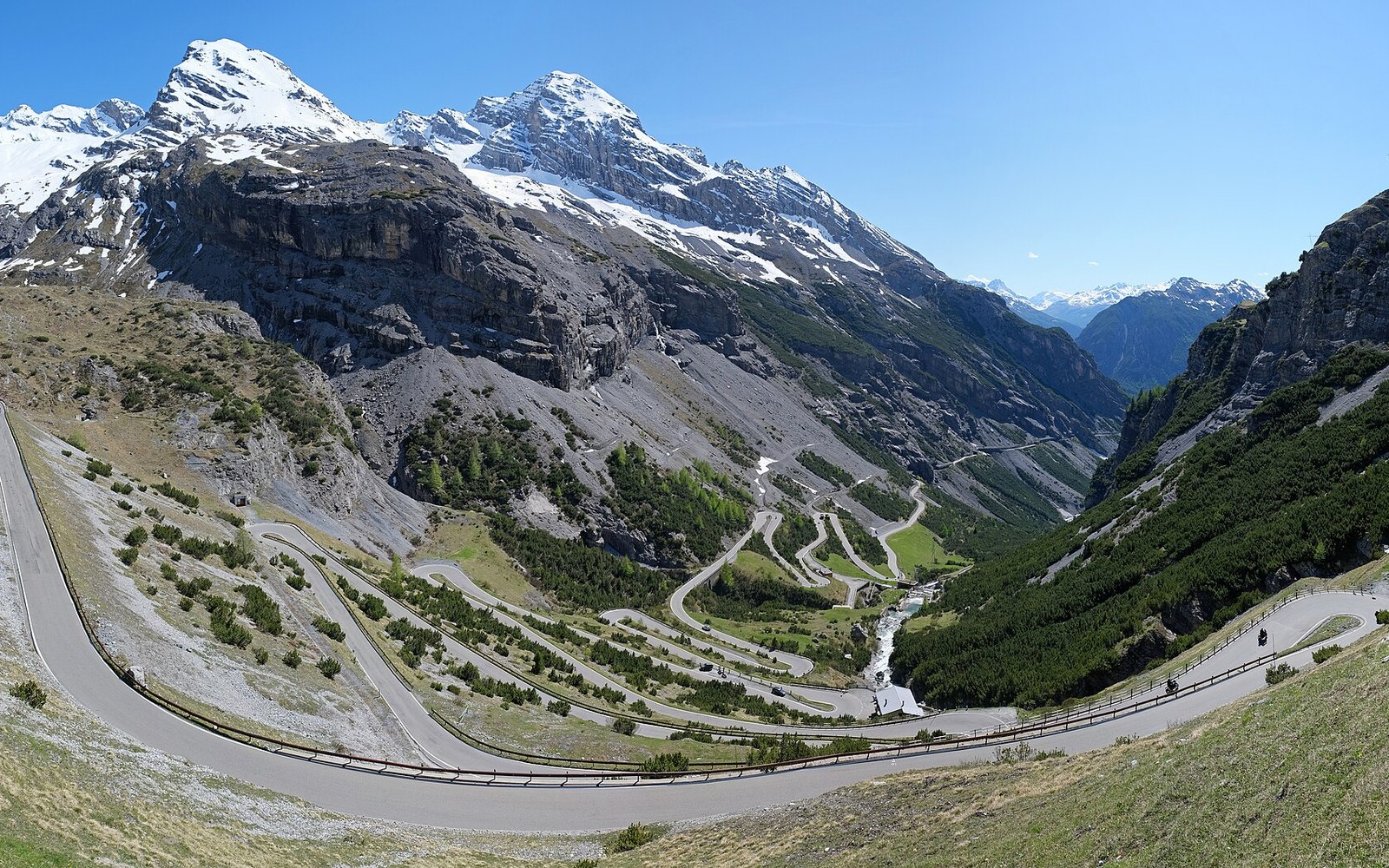
The practical cut-off on the tightest hairpins — the kind found on the Stelvio's north side — is generally described as around seven metres of vehicle length, though that figure changes with wheelbase configuration. A van-conversion on a short chassis handles differently from a coachbuilt motorhome on a long one even if both measure six and a half metres overall. The relationship between length and turning radius is not linear; it depends on where the rear axle sits relative to the body's rear end. A long rear overhang sweeps an arc that can hit the rock wall on the inside of the bend even as the driver believes they are clear. This is the geometry that matters, and it cannot be read off a vehicle specification sheet without understanding what the numbers describe.
The Stelvio, specifically
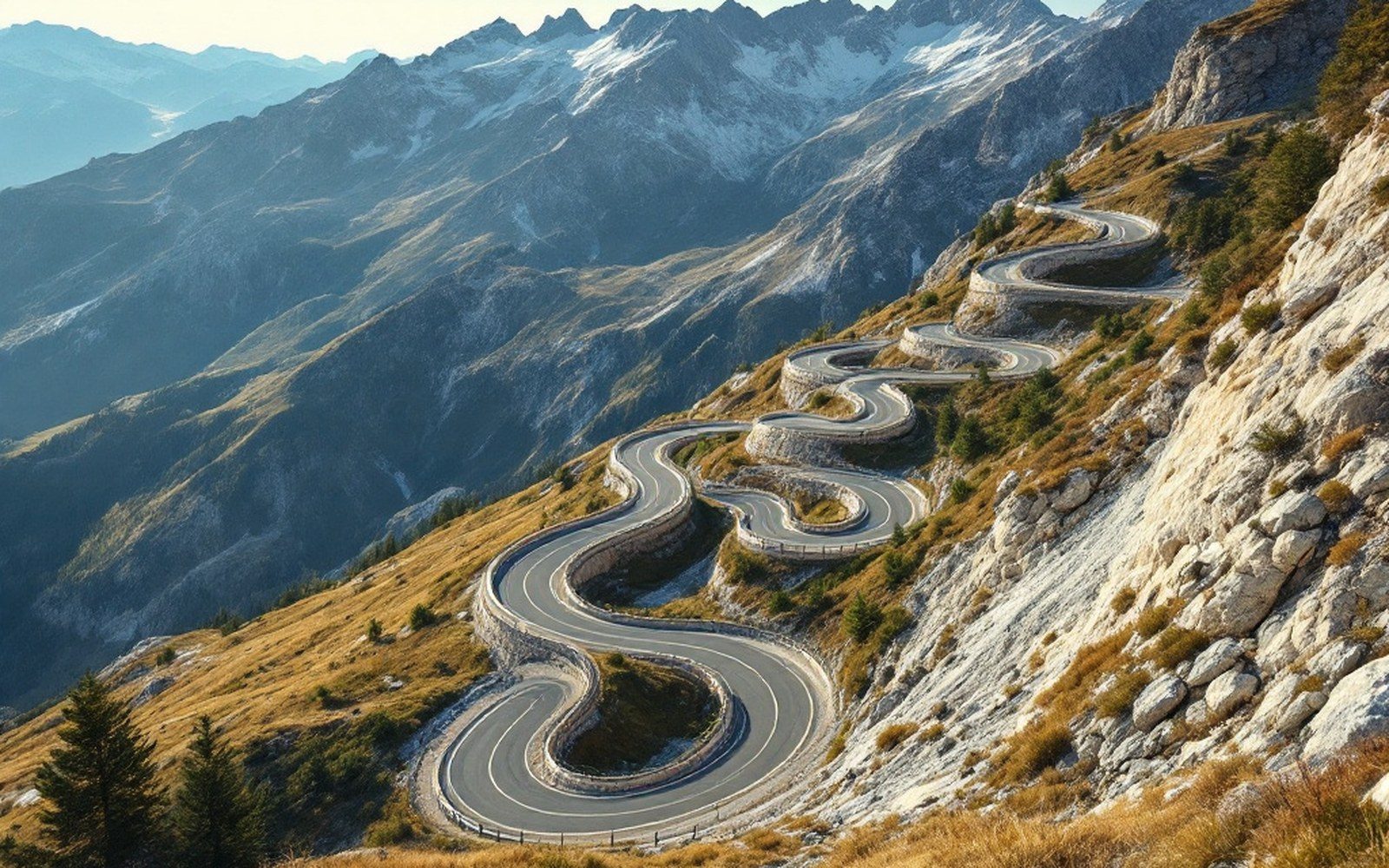
The Stelvio Pass sits at 2,757 metres and connects Bormio, on the Lombardy side, with Prato allo Stelvio in South Tyrol. The road was built between 1820 and 1825 under Austrian administration, engineered by Carlo Donegani, and the design problem his team solved was how to gain altitude on a mountain face too steep for any reasonable gradient. The answer was the hairpin sequence now numbered from the top: forty-eight bends on the north side and several dozen more on the south, each one radiused to the minimum that Donegani's construction teams could cut into the rock. They were not optimising for twenty-first century motorhomes. They were optimising for mules, then for early motor vehicles of a very different wheelbase.
The critical bends on the north side — the ones most likely to require a shunt from a longer vehicle — are tight enough that a standard panel van in standard configuration will make them in a single sweep, but a coachbuilt motorhome above about seven metres will not, reliably. Above eight metres the shunting becomes near-certain on multiple bends, and the arithmetic changes: it is not one awkward moment on one bend but a series of them across a climb that takes forty-five minutes under good conditions. Each shunt is a pause, a reversal, a forward movement, and a check that nothing has descended into the space you need. On a busy summer weekend the arithmetic is worse, because that space is frequently occupied.
There is no posted length limit for the Stelvio under Italian road law in the way there are explicit weight limits on many roads. The road is open to the weight classes that use it. The constraint is physical and geometric rather than legal, which makes it harder to communicate cleanly and easier to misread as no constraint at all. A driver who has handled a long vehicle over Brenner and Reschenpass may arrive at the Stelvio's north side well-prepared for gradient and unprepared for the hairpin radius.
Radius in the Dolomites, and elsewhere
The Stelvio is the set piece, but the geometry problem appears across the alpine and pre-alpine network wherever roads were built on eighteenth or nineteenth century alignments. The Dolomites — specifically the passes connecting the major valleys, including Passo Gardena, Passo Sella and Passo Falzarego — carry similar constraints on their tighter corners, though few reach the hairpin density of the Stelvio north face. The practical test on any of these roads is not whether the vehicle has been to an alpine pass before, but whether it has been to this one, or to one of similar design.
The tool that experienced drivers use is the wheelbase-to-length ratio as a rough proxy, combined with the vehicle's stated turning circle. A turning circle below about ten metres gives reasonable confidence on most alpine hairpins; above eleven to twelve metres, specific recce or local knowledge becomes important. These are not official thresholds — Italian road law does not frame the question this way — but they are the working numbers passed between people who drive these roads regularly. The Highway Code for Italy, the Codice della Strada, governs maximum vehicle dimensions for general road use but does not set hairpin-specific length limits; that gap is filled by physics, not regulation.
Each shunt is a pause, a reversal, a forward movement, and a check that nothing has descended into the space you need.
For Tuscany, the radius problem shifts from alpine hairpins to the narrow white roads — the strade bianche — where the constraint is not turning circle but width, and where a passing place (a widening built into the road) may not appear for several hundred metres. A long vehicle meeting another on a single-track strade bianca faces a different version of the same underlying question: does the road geometry permit what the driver wants to do? On the Stelvio the answer involves the hairpin radius. On a Tuscan back road it involves whether the verge is firm enough to reverse onto without sinking.
In both cases the rule is the same: the measurement that matters is not the one on the pass sign at the summit. It is the relationship between the vehicle's swept path and the road's tightest geometry, measured at the point where the road does not widen. The pass lets you up. The radius decides whether you get round.
On a busy summer weekend the arithmetic is worse, because that space is frequently occupied.