North to south, out of seasonSection 4
The Dolomites, and the rifugi above the road
The valley floors are driveable. The rest is walking.
What the valleys give you
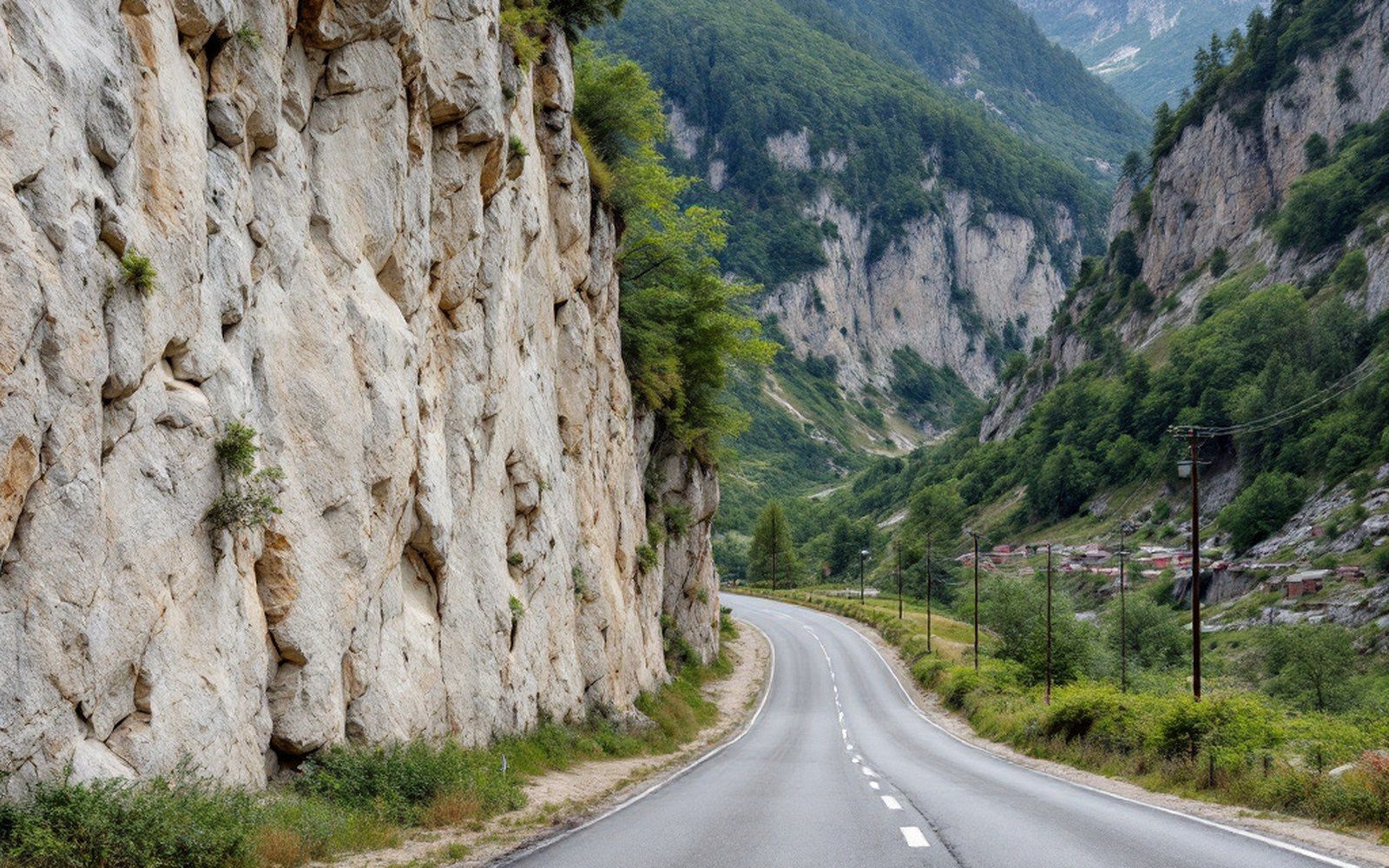
The Dolomites are organised, in the useful sense: the main Val Gardena, Val Badia and Cortina corridors carry paved roads, marked passes and, on the valley floors, a scatter of aree di sosta (formal campervan service stops) and authorised parking areas sized for longer vehicles. The infrastructure exists because summer tourism is the region's economy, and campervans are part of that economy. What the valleys do not give you is the view. The towers and pillars — the Tre Cime di Lavaredo, the Sella group, the Catinaccio — sit above the road, above the treeline, and are reached by trail.
The passes that connect the valleys are themselves worth the drive. The Pordoi, Falzarego and Gardena passes are all paved, all signed, and all carry weight and width data that matter before you leave the valley. A long wheelbase van on the Pordoi hairpins needs attention rather than anxiety; the turning radius on the high passes is the real variable, and the Dolomites' paved surfaces forgive less than a gravel Alpine road where a wheel can run wide without consequences. Height is rarely the constraint here; length and overhang are.
The rifugi, and what they are not
A rifugio (mountain hut, plural rifugi) in the Dolomites is a staffed building — sometimes a full kitchen, sometimes a dormitory, sometimes both — positioned where a trail junctions or a ridge gives the reason to stop. The Club Alpino Italiano manages or authorises the majority of them across the country, and their mapping of rifugi by altitude, access difficulty and facilities is the practical resource for anyone planning above the road.
The distinction that matters for a campervan traveller is that a rifugio is not a campsite and not a sosta. It is a building on a mountain. You do not drive to it. You park below, in whatever the valley or pass car park allows, and you walk. Some rifugi sit twenty minutes from a road; others require three hours of ascent. The distances are not metaphorical — the Tre Cime car park at Rifugio Auronzo is at roughly 2,320 metres, and the Rifugio Lavaredo is a further forty minutes above that. The road charge to reach the Tre Cime area is real and seasonal; the car park itself can take a van of standard height, but the road narrows on approach and the turning at the top is documented as a constraint for vehicles beyond a certain length. Check this before the season opens, because the road manager's own notices are the only reliable source.
Season matters sharply in the Dolomites. Most rifugi open between mid-June and late September, with exact dates varying by altitude and snow clearance. The passes follow similar rhythms — Passo dello Stelvio, which flanks the Dolomites to the west near Bormio and Prato allo Stelvio, is among the last to open in the Alps, typically in late May or early June. Planning a circuit that includes multiple passes in May is planning for probable closure on at least one of them. The Provincia Autonoma di Bolzano publishes road status for the main Alta Via corridors; the Veneto side falls under the Regione Veneto's road authority.
The practical shape of a Dolomites stop
The working pattern for a campervan in the Dolomites is valley parking or a sosta overnight, day walks to altitude, passes driven in the morning before traffic thickens. The ZTL (limited traffic zone) network here is less aggressive than in Tuscany or historic urban centres — Cortina and Ortisei have restricted access zones, but the road network into the mountains is generally open to private vehicles outside the summer shuttle windows. Those shuttle windows exist specifically because certain approach roads fill beyond function in July and August; outside those months, the traffic is thinner and the road easier.
The Dolomites are a UNESCO World Heritage Site recognised in 2009 for their geomorphological and aesthetic values. That status affects planning permissions and infrastructure development above the road. It does not affect where a van can park below it.