The camera at the gateSection 2
The camera at the gate
Every Italian historic centre has a boundary, and almost every one enforces it with a camera rather than a barrier. The road stays open; the fine arrives later.
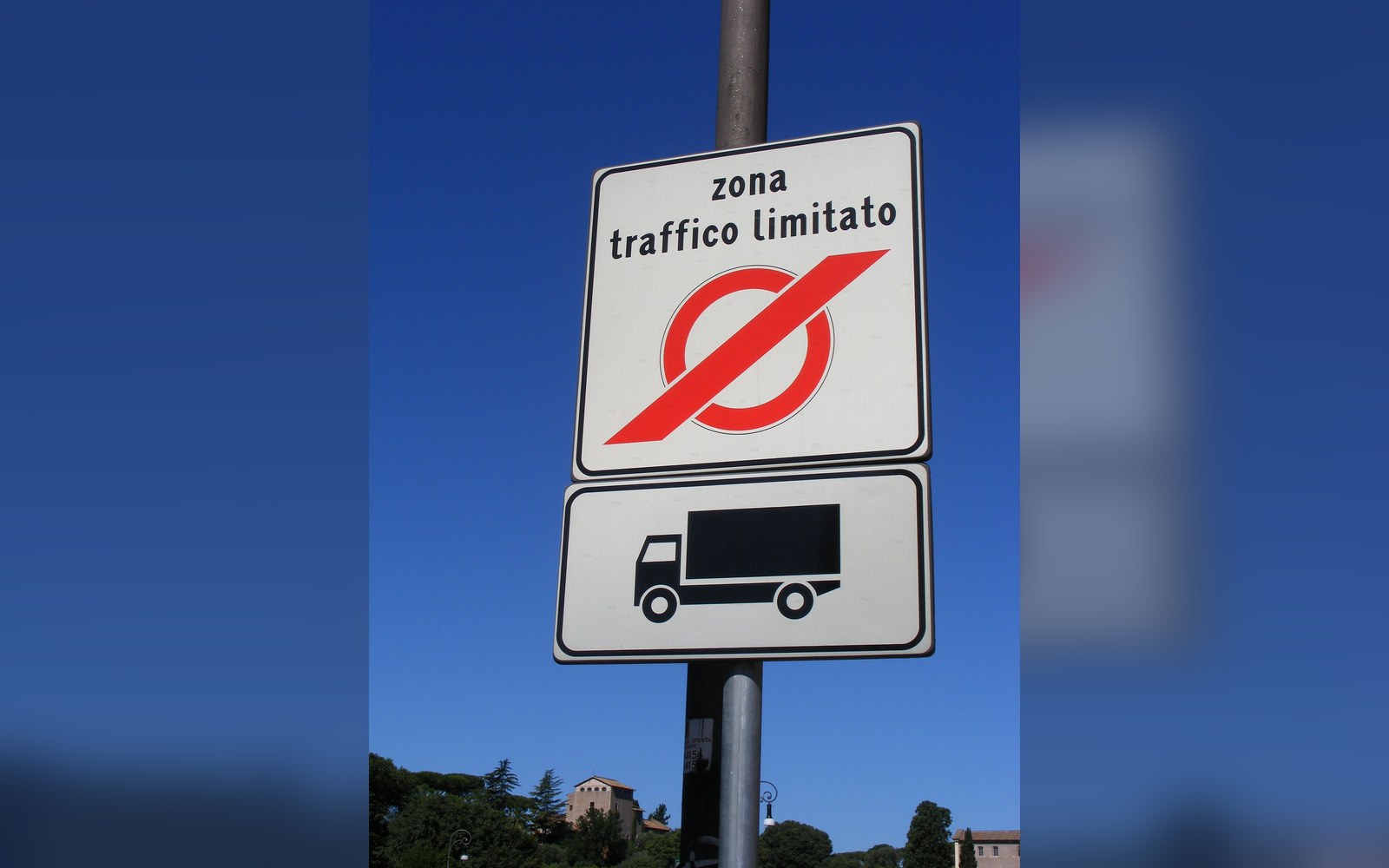
What the camera actually is
A ZTL — zona a traffico limitato, a limited-traffic zone — is a designated area of a town or city centre where vehicle access is restricted to residents, permit holders and defined categories of service vehicle. The boundary is marked at the road surface and, more importantly, at the pole beside the road: a sign showing the ZTL designation, hours of operation and, almost always, a camera mounted above or beside it. That point is the varco, the entry gate. Nothing physically stops a vehicle. The pole is not a barrier.
The camera reads the number plate as the vehicle passes. In most systems that reading goes immediately to a database that holds the list of permitted plates — residents with active permits, taxis, delivery windows, ambulances. If the plate is on the list, nothing happens. If it is not, the system logs the entry with a timestamp and image, and the process that eventually produces a notice begins. The varco does not discriminate by vehicle type at the point of entry: a campervan, a car and a motorcycle are treated identically. Italian municipalities are required to notify foreign-registered keepers through official channels, which in practice means routing through the vehicle's country of registration or through the hire or leasing company that owns the plate.

The hardware varies. Older installations used infra-red cameras that worked at night but struggled in direct low sun. Newer systems — common in cities that have invested in their ZTL infrastructure since the early 2000s — use OCR plate-reading technology with higher accuracy rates and often include a secondary camera to capture the front of the vehicle as well as the rear. Florence, where the ZTL covers a large part of the historic centre and is one of the most extensively documented in Italy, has run a camera-based system for long enough that its varco locations are mapped, studied and referenced in academic urban-mobility literature. Lucca, whose walled centre is smaller and the boundary cleaner, operates on the same principle: the wall itself is the logical perimeter, the gates in it are the varchi.
The hours, and why they matter
Most ZTLs are not in operation twenty-four hours a day, seven days a week, though a significant number approach that in their core areas during summer. The operating hours are posted on the sign at the varco, and they are the only authoritative source for any given entry point at any given time. Broadly, the patterns fall into a few types: daytime-only restrictions that lift in the evening; restrictions that run through the day but exclude early morning for deliveries; and full-day restrictions that apply every day including Sunday. Some historic centres operate a two-tier system where the inner core is always restricted and an outer ring has limited-hours restrictions.
For a campervan the hours matter for a practical reason that goes beyond the obvious. Even where a sosta — an area di sosta, the service-and-overnight point that forms the backbone of the Italian campervan network — sits inside or immediately adjacent to a ZTL boundary, the window for reaching it without triggering an entry infraction may be narrow and specific. Some sostas that serve medieval hill towns are accessed by roads that pass through a varco. The sosta operator will generally know whether there is a permit arrangement or a recognised route that avoids the restricted stretch; the sign at the varco will state the hours. Neither assumption — that a sosta must be reachable, or that a route that looks open will be penalty-free — holds without checking both.
The hours also vary seasonally. Italian municipalities adjust ZTL operating schedules, and what applies in August in a Tuscan town may differ substantially from the October schedule. The sign at the varco is updated; a screenshot taken in summer is not reliable in spring. The only usable source is the current sign, or the municipality's own published schedule, which for larger cities is usually available through the comune's official website.
How the boundary sits in the landscape
Understanding the ZTL as a line rather than a wall changes how the road ahead reads. There is no queuing, no checkpoint, no indication that anything has happened. A campervan can cross a varco at touring speed and the only evidence is a camera that may or may not have been in operation depending on the hour and day. That invisibility is the characteristic that produces most of the unexpected notices.
The boundary is also rarely a single point. A ZTL of any size has multiple varchi — Lucca has several in its city gates alone, and a larger city like Naples has ZTL zones that span entire neighbourhoods with entry points on each approach road. A driver who finds one varco and avoids it may cross another without recognising it. The signs are consistent in format — white-background ZTL designation, red-bordered — but their placement assumes a driver who knows what to look for, and the camera above them does not pause for those who do not.
Some sostas that serve medieval hill towns are accessed by roads that pass through a varco.
The physical approach to a historic centre in a long vehicle adds a separate layer. The road geometry that leads to a varco — narrow, often with a bend that does not widen — may itself be the constraint that prevents entry, independent of the ZTL. In walled towns the gate through the wall is the natural varco, and those gates were built for carts, not for a vehicle whose turning radius at high alpine passes is already a planning consideration on the open road. The same dimension that decides whether a pass is viable decides whether the approach lane to a gate is navigable. Length and width precede the question of permitted access.
Outside the historic core the ZTL usually ends and ordinary urban road rules apply, but the sosta network in many central Italian towns is laid out on the assumption that visitors arrive by van and stop at the edge, then walk or use public transport for the historic centre. That arrangement is explicit in how many comuni have positioned their official sostas: at the wall, not through it. The gate is the boundary and the camera at it is the enforcement mechanism. Neither is hidden, and neither requires more than a direct look at the sign on the pole to read correctly.
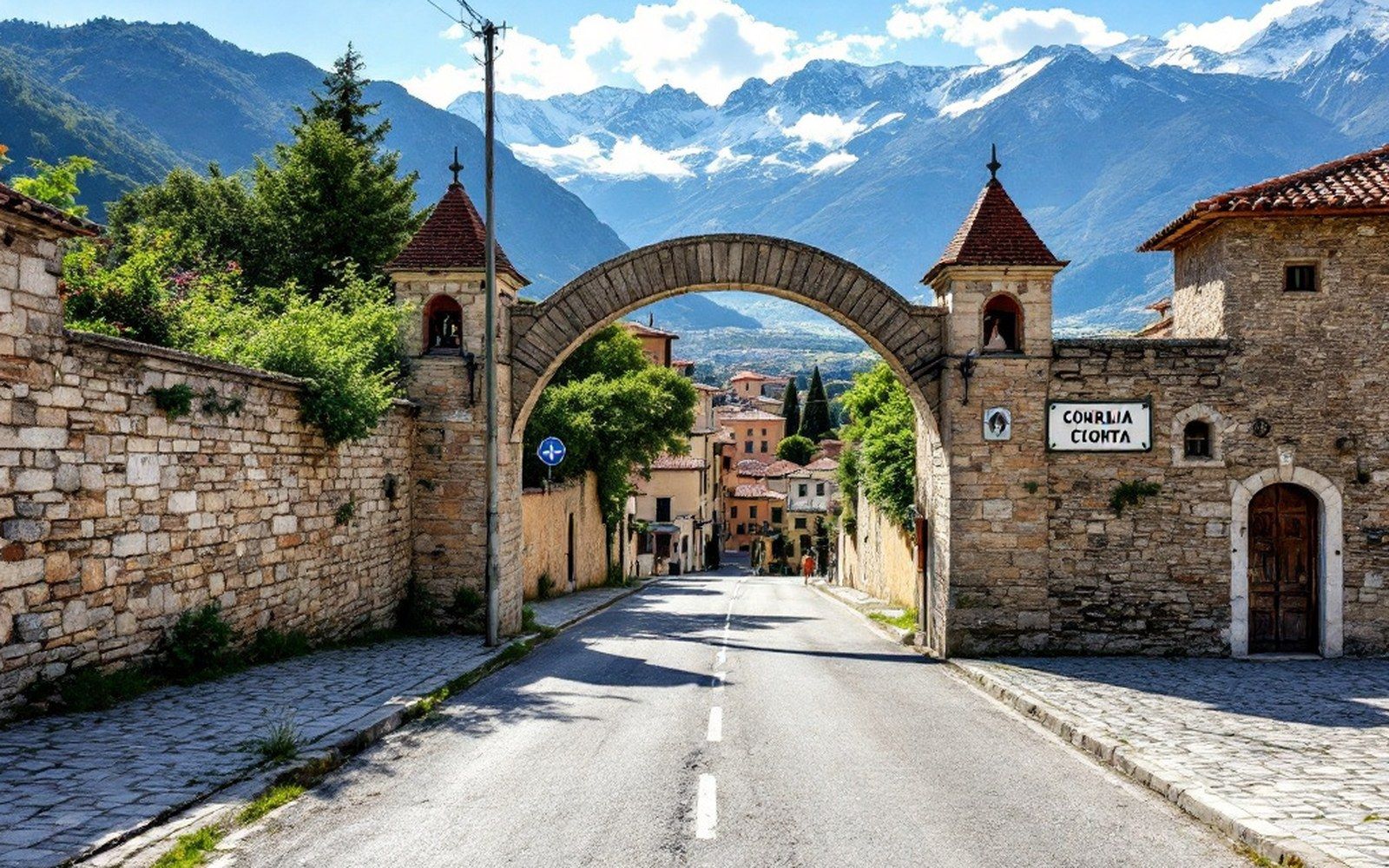

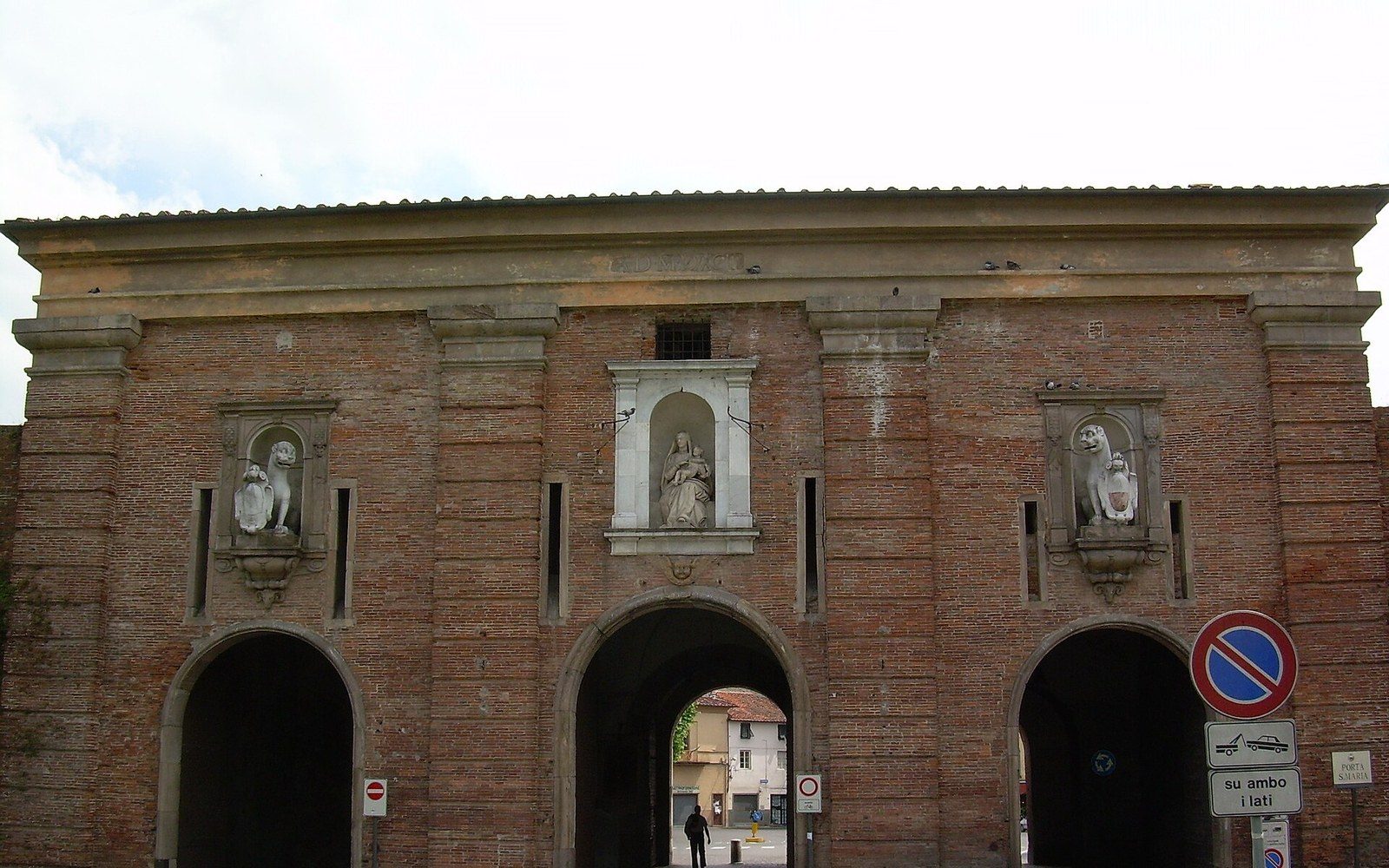
Understanding the ZTL as a line rather than a wall changes how the road ahead reads.