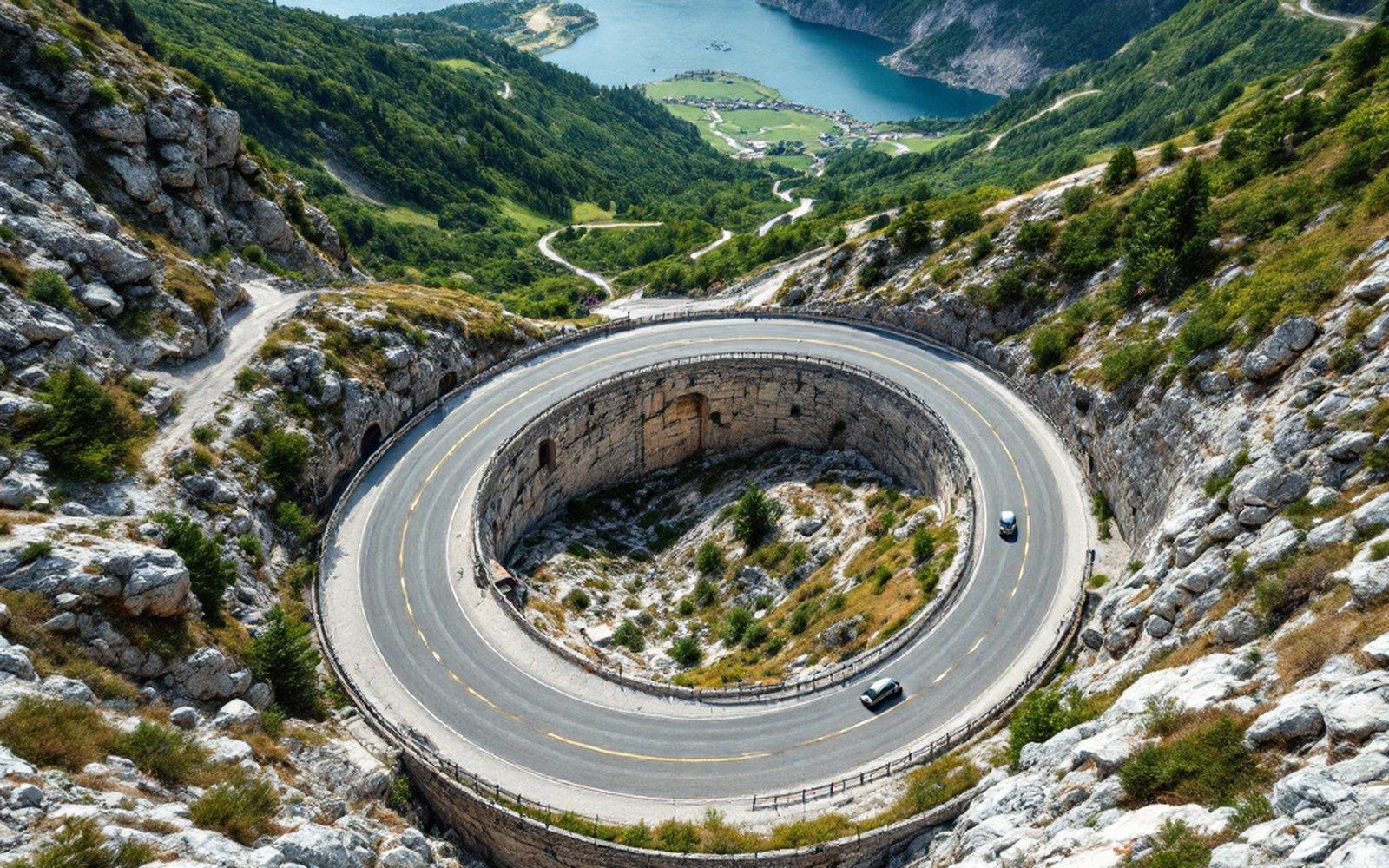
The limit is the radiusSection 3
Weight limits, and the signed route
Where the sign says 3.5 tonnes and the van is heavier, the bridge is not a suggestion.
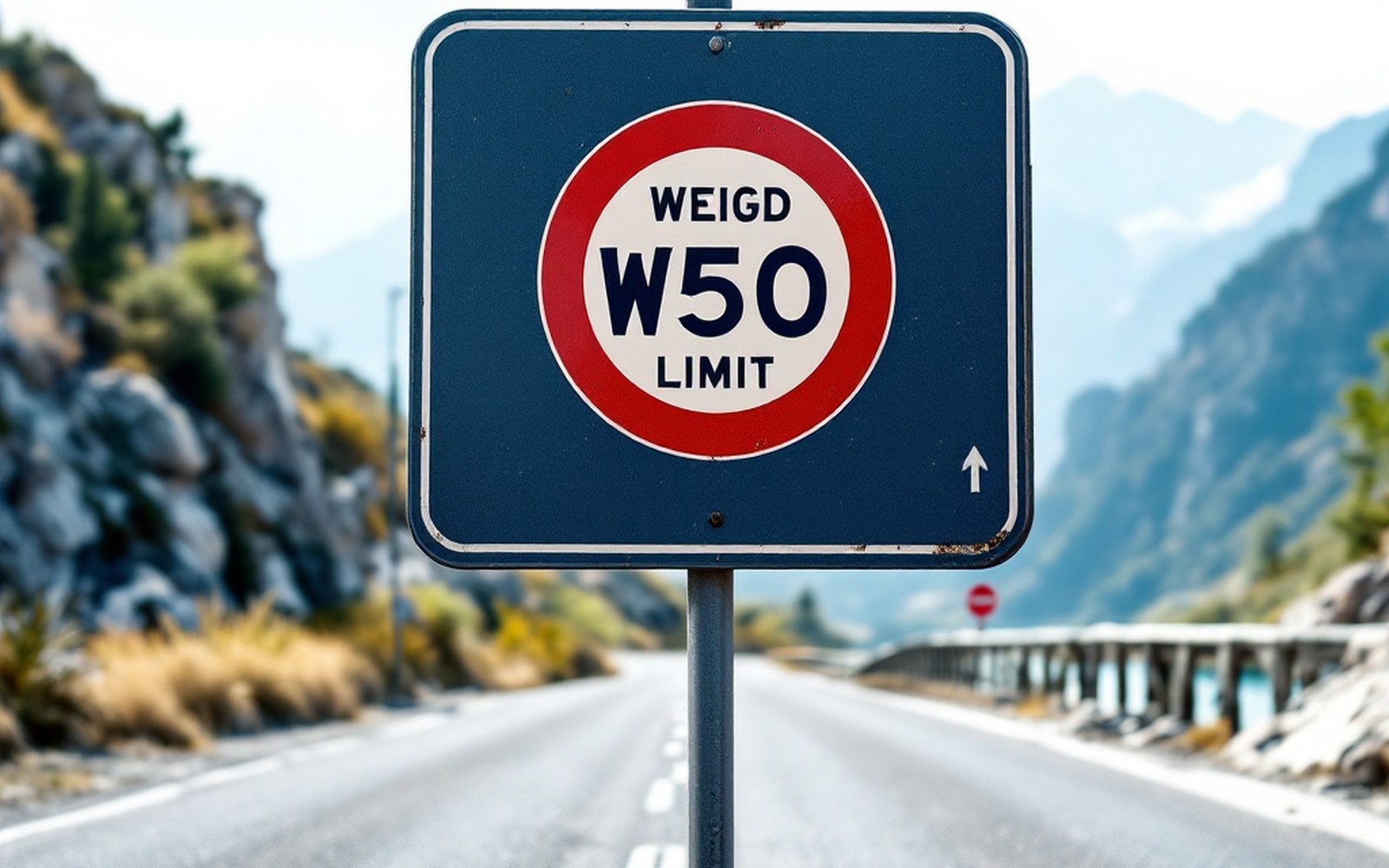
The numbers on the sign
A number in a red circle on a white disc means one thing: no vehicle whose gross vehicle weight (GVW) — the fully laden legal maximum — exceeds that figure may cross. In Italy these limits appear on bridges, in tunnels, and on stretches of secondary road where the carriageway or its foundations were never built for heavy traffic. The most common thresholds are 3.5, 7 and 12 tonnes, and a motorhome does not have to be enormous to fall on the wrong side of the first of them. A mid-range panel-van conversion registered at 3,850 kg GVW is already over.
The figure that matters is the one on the vehicle's registration document — the technical maximum, not the actual loading. That is how Italian road law reads the limit, which means an empty vehicle is treated identically to a full one. There is no weighbridge at the approach, no officer stopping traffic; the sign exists, the plate is recorded if a camera is present, and what happens next is administrative. The infrastructure, meanwhile, does not negotiate.
Why the diversion is often enormous
Secondary roads in Italy carry weight limits disproportionately often because the country's bridge stock includes a large number of structures built before the postwar increase in vehicle weights, and because the Apennines and the Alps force roads across rivers and gorges at points where a heavier crossing was never funded. A limit on one bridge typically means a limit on the whole valley road — because the alternative crossing, if one exists, sits on a road with the same problem.
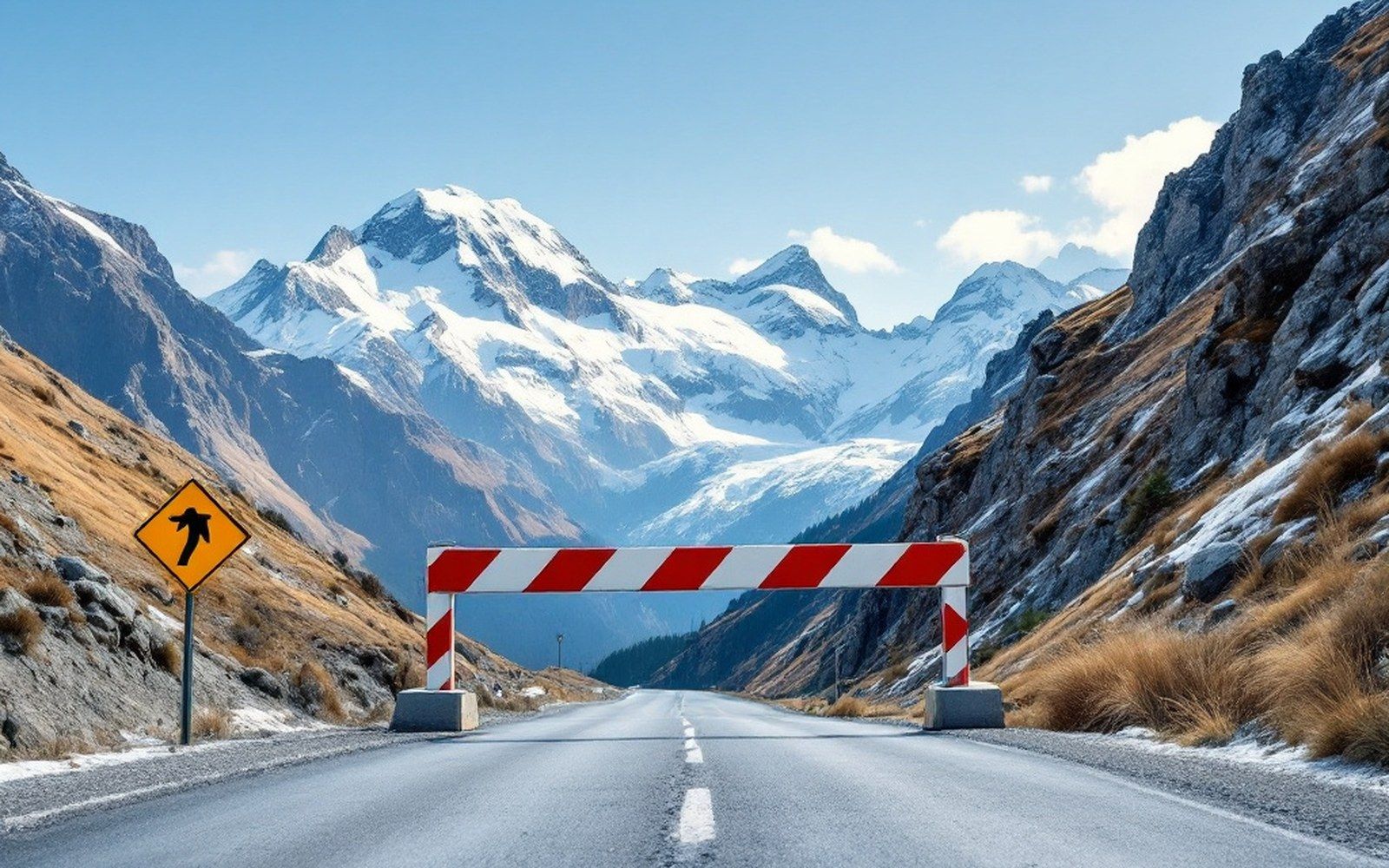
The practical consequence is that a diversion routes back to the nearest arterial — sometimes a superstrada (dual carriageway), sometimes the autostrada — and rejoins the intended destination from a completely different direction. In mountainous terrain this can mean a hundred kilometres added to a fifty-kilometre leg. In the Dolomites, where valley roads funnel through single crossings with no parallel alternative, a 3.5-tonne limit can effectively rule out an entire circuit for any van above that threshold. The same applies in parts of Tuscany where the signed white-gravel route between villages crosses an old stone bridge rated for agricultural traffic.
Bridges are not the only constraint. Tunnels on secondary roads sometimes carry both a height restriction and a weight limit independently: a van that clears the height board may still be over the tonnage limit. Both signs must be read, and both apply simultaneously.
Reading the signed route
Some regions sign an alternative route specifically for heavy vehicles — the percorso alternativo per veicoli pesanti. These diversions are marked in advance and, where they exist, take a van around the restricted section on a road rated for higher axle loads. The signs are not universal. Where they are absent, the driver is expected to have identified the limit before arriving at the bridge approach, not at it.
Italian road signs for weight limits are standardised under the Highway Code, and the circular prohibitory format is unambiguous, but the placement is sometimes only metres before the restricted point, giving little room to turn a long vehicle. On a narrow valley road, a motorhome that cannot reverse cleanly around a bend has already created a problem before it has technically broken a rule. Understanding the gross vehicle weight of a specific vehicle before the journey — and cross-referencing it against the planned route — is what the signed route requires, not what the sign at the bridge demands.
The infrastructure is old, the limits are real, and the detour is long. That is the geography.